
The Magic Formula
Can the directory lead us away from the abyss?

Have you ever noticed that, regardless of country or government type, executive power almost always rests in the hands of a single individual? Presidents, prime ministers, monarchs—one person typically embodies the authority of an entire nation. This pattern is so common that we rarely question it, whether in democracies or autocracies. But is it the only way?
In fact, there is one unique exception to this model. In one country, executive power is not held by a single leader but by a Directory. Today, we’ll explore this less familiar approach to leadership and how it might hold lessons for a world facing growing divisions.
Welcome to the Borderliner.
The directorial system distributes the role of head of government (or state) among multiple people, avoiding the concentration of power in any single figure. While several countries use this system in a symbolic, non-executive role, only one country entrusts it with full executive power. For instance, Bosnia and Herzegovina, Andorra, and San Marino each incorporate forms of a Directory, though their power is largely representative1. Bosnia’s three-person presidency2 ensures ethnic representation but lacks direct executive authority, while Andorra3 and San Marino’s4 diarchies primarily serve ceremonial purposes. Switzerland, however, is different: its Directory serves as both the head of state and the head of government, embodying executive power in a way unlike anywhere else.
The past
To understand how the Swiss Directory came to be, let’s explore its historical roots. The concept of collective governance has ancient precedents, from the Roman consuls and triumvirates to the still-enduring diarchies of Andorra and San Marino. Though few and far between, two particularly notable experiments in shared leadership emerged during the revolutionary movements of the 18th century, bringing fresh ideas to governance and laying the groundwork for the model we see in Switzerland today.
The Pennsylvania Constitution of 1776
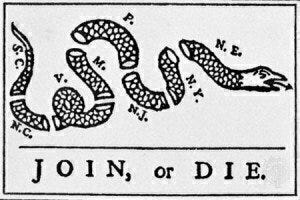
After declaring independence, the newly formed United States began establishing republican institutions in each of its states. Among these, Pennsylvania’s 1776 constitution stood out as one of the most innovative, introducing principles still foundational to modern constitutions. This constitution included a declaration of rights, influenced by the Virginia Declaration and shaped by Enlightenment thought, which would later inspire the French Constituent Assembly’s work in 1789. Additionally, it introduced a framework for a shared executive: a Supreme Executive Council made up of twelve individuals elected by the General Assembly. This body held executive authority collectively, marking a clear break from the single-governor model. However, this system was short-lived. In 1790, Pennsylvania adopted a new constitution that returned to the single-governor structure, which remains today.
The Constitution of Year III (1795) in France
In France, the First Republic was declared by the Constituent Assembly in 1793 with the Constitution of Year I, incorporating the Declaration of the Rights of Man and Citizen from 1789. The constitution also called for a shared executive body of twenty-four members, but this was suspended during the Reign of Terror, when the Committee of Public Safety took control. After Robespierre’s fall, a new constitution introduced the Directory in 1795, with a five-member executive acting as both head of state and government. Members were elected by the Conseil des Anciens (Upper House) from a list proposed by the Conseil des Cinq-Cents (Lower House). The Directory also had a rotating presidency, with one director chosen every three months for a largely ceremonial role.
Although the Directory governed France from 1795 to 1799, its tenure was marred by internal divisions, corruption, economic crises, and the difficulty of managing a complex military landscape. Ultimately, this unstable environment paved the way for Napoleon’s rise. Despite its flaws, however, the Directory would leave an unexpected legacy in Swiss governance.
The Helvetic Republic
In 1798, France invaded the Swiss Confederation, leading to the establishment of the Helvetic Republic, a short-lived centralised state that mirrored France’s Directory with a five-member executive. Switzerland, a country previously structured as a loose confederation of cantons, experienced centralised governance for the first time. Although the Helvetic Republic dissolved in 1803 and Switzerland returned to its decentralised structure with the Act of Mediation, the Directory model lingered in Swiss political thought. When Switzerland adopted its federal constitution in 1848, it incorporated a modified version of the Directory that has remained central to Swiss governance ever since.
Present
Today, Switzerland’s Federal Council embodies a unique form of Directory composed of seven members, elected by Parliament following national elections. Swiss citizens vote for Parliament, which then elects the seven councilors. Each councilor oversees a specific government department, similar to ministers in other systems, yet collectively they share responsibility as the head of government. The role of President exists but is largely ceremonial, rotating annually within the council and conferring no additional authority.
Beyond these formal structures, two key conventions guide the Federal Council. First, once elected, councilors set aside active party roles to represent all Swiss citizens. The second is the “magic formula,” an institutional convention ensuring that the council reflects political diversity rather than solely the majority coalition. The top three parties each hold two seats, and the fourth party holds one. This formula results in a broadly representative council; in 2023, for example, the top four parties received around 75% of the vote, ensuring that the council represents the interests of a vast majority of Swiss voters.
Switzerland’s Directory system succeeds not only because of its structure but also because of the country’s unique cultural and social context. On one hand, Switzerland is internally diverse, with four national languages and, historically, significant religious differences. On the other, Swiss society places a high value on compromise, often preferring the challenge of finding common ground over the potential strife of division. This allows citizens to manage differences without sacrificing unity. The collective head of government perfectly reflects this balance, embodying both diversity and cohesion.
The future?
Most likely, this political framework could only flourish in Switzerland, where these cultural and social roots run deep. Still, one question is worth considering: in a time of growing polarisation, where different visions for collective well-being increasingly divide rather than unite, could the magic formula work elsewhere?
In each of these cases, the directorial model is used as Head of State, not Head of Government.
Bosnia and Herzegovina has three Presidents as Heads of State, each representing one of the country's major ethnic groups. The system in Bosnia and Herzegovina has a series of very interesting peculiarities to explore, and we will delve into them in an upcoming article.
The President of France and the Bishop of Urgell are the official co-princes of the Country, yet executive power is held by the Prime Minister who is elected by the Parliament.
The Captains Regent are the official heads of state of San Marino, yet executive power is held by the Congress of State, which is elected by the Grand and General Council. Formally, the Congress of State is a collegial body, but in practice, the Minister of Foreign Affairs acts as the Prime Minister.